Glass is no longer just a clear boundary between indoors and outdoors. In China, advances in coated, insulated, laminated, and smart glass are changing how buildings manage daylight, heat, privacy, and safety. The shift matters. The International Energy Agency’s 2023 Buildings report estimates that buildings account for 30% of global final energy consumption and 26% of energy-related emissions. The U.S. Department of Energy also reports that windows can account for 25–30% of residential heating and cooling energy use. These figures are not China-specific, but they show why better glazing has become an architectural priority.
This guide examines ten glass technologies influencing contemporary design, from low-emissivity coatings and vacuum-insulated units to electrochromic glazing and building-integrated photovoltaics. Each can change the feel of a space: a façade that dims in strong sun, or a quieter room behind laminated panes. The practical results depend on climate, orientation, installation quality, and maintenance. A sophisticated product can still disappoint when poorly specified. That deserves attention. The goal is to explain how glass technology is changing architecture without treating every innovation as a guaranteed energy or comfort solution. Data, design claims, and real-world limits all matter.
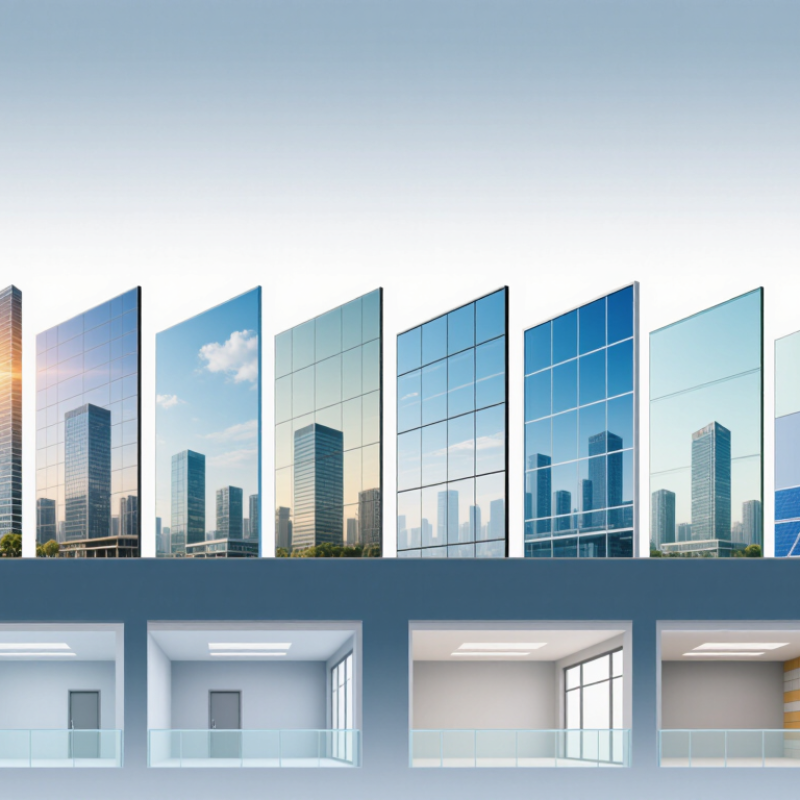
China’s Top 10 Glass Technologies Changing Architecture?
Tempered glass is typically three to five times stronger than annealed glass in bending. The exact improvement depends on thickness, processing quality, and surface compression. During production, controlled heating and rapid cooling strengthen the glass surface. When it breaks, it usually crumbles into small, blunt fragments. This behavior reduces severe cutting risks in doors, partitions, and façades.
Edges matter. Small chips can weaken the entire panel. Site teams should inspect corners, holes, and cut-outs before installation. Designers also need to check wind pressure, impact loads, thermal stress, and frame movement. A panel that passes factory testing may still fail after poor handling. That gap is easy to underestimate.
Structural glass requires more than high strength. Laminated systems can hold broken pieces together after impact, improving protection above entrances and beside walkways. Engineers should verify glass thickness, interlayer performance, support conditions, and applicable Chinese construction standards. Heat-soak testing may reduce, but not eliminate, the risk of unexpected breakage from internal inclusions. It is not a magic solution. In practice, rushed detailing remains a common weakness. Better drawings, traceable inspection records, and careful edge protection often matter as much as the glass specification.
Tempered glass is typically about 3–5 times stronger in bending than comparable annealed glass, while advanced glass systems improve safety, energy performance, daylighting and façade design.
| No. | Glass Technology | Representative Technical Data | Architectural Applications | Safety and Structural Contribution | Relevant Standards / Basis |
|---|---|---|---|---|---|
| 1 | Fully Tempered Glass | Bending strength is commonly about 3–5 times that of comparable annealed glass. On breakage, it generally fragments into many small particles rather than large sharp shards. | Curtain walls, doors, shower enclosures, balustrades, skylights and façade panels. | Improves resistance to thermal stress and mechanical impact. It is not suitable for cutting, drilling or edge processing after tempering. | GB 15763.2; GB/T 28195 |
| 2 | Heat-Strengthened Glass | Typical bending strength is about twice that of comparable annealed glass. It has lower spontaneous-breakage risk than fully tempered glass but breaks into larger shards. | Façades, insulated glazing units and areas requiring higher thermal resistance without fully tempered fragmentation. | Provides improved thermal and wind-load resistance. Where human-impact safety is required, it is normally combined with laminated glass. | GB 15763.2 |
| 3 | Laminated Safety Glass | Two or more glass plies are bonded with an interlayer such as PVB or ionoplast. After fracture, the interlayer helps retain broken pieces in place. | Overhead glazing, balustrades, canopies, façades, floors and security partitions. | Reduces fallout and penetration hazards. Structural capacity depends on glass thickness, interlayer type, support conditions, temperature and load duration. | GB 15763.3; JGJ 113 |
| 4 | Insulating Glass Units | Two or more panes separated by a sealed cavity. A typical double-glazed unit uses a cavity of approximately 6–20 mm; thermal performance depends on gas fill, coatings, spacer and frame. | Energy-efficient façades, windows, curtain walls and acoustic building envelopes. | Reduces interior condensation and heat transfer. Laminated or tempered panes can be specified within the unit for impact and fall protection. | GB/T 11944 |
| 5 | Low-E Coated Glass | Low-emissivity coatings commonly achieve emissivity values around 0.04–0.15, depending on coating type and configuration. Solar-control versions can significantly reduce solar heat gain. | High-performance windows, curtain walls, atriums and large glazed façades. | Improves thermal comfort and energy efficiency. Coating location, edge deletion and compatibility with heat treatment are critical to long-term durability. | GB/T 18915.1; GB/T 18915.2 |
| 6 | Heat-Soak Tested Tempered Glass | Heat-soak testing is commonly conducted at approximately 290 ± 10°C to help identify inclusions that could cause spontaneous breakage. It does not eliminate all breakage risk. | Overhead glazing, high-rise façades, canopies and locations where replacement access is difficult. | Can reduce the probability of delayed spontaneous breakage in specified applications, while maintaining the fragmentation characteristics of tempered glass. | EN 14179; project specifications |
| 7 | Fire-Resistant Glass Systems | Certified systems are commonly rated from approximately 30 to 120 minutes or more, depending on the complete tested assembly, including framing, seals and installation. | Fire doors, stair enclosures, smoke compartments, escape routes and glazed fire barriers. | Can provide integrity, and in some systems insulation, for a specified period. Fire performance cannot be judged from the glass pane alone. | GB 15763.1; GB 50016 |
| 8 | Ceramic-Frit and Digital-Printed Glass | Ceramic patterns are fused to the surface during heat treatment. Printed coverage, color, pattern density and reflectance affect solar and visual performance. | Bird-safe façades, solar-control screens, privacy glazing, signage-free architectural patterns and decorative envelopes. | Can improve solar shading and visual comfort. Frit patterns may also increase bird visibility, but effectiveness depends on pattern geometry and site conditions. | Project performance specifications |
| 9 | Electrochromic and Dynamic Glazing | Glazing changes optical state through an electrically controlled process. Switching time can range from minutes to longer periods, depending on pane size, temperature and system design. | Premium façades, offices, airports, museums and spaces requiring variable glare and solar control. | Reduces glare and solar heat gain without conventional blinds. Requires power, controls, commissioning and compatible electrical infrastructure. | Manufacturer-independent system testing |
| 10 | Glass Fins and Point-Supported Structural Glazing | Uses glass panes, fins, bolts, fittings or spider connections as part of the load-transfer system. Structural design must account for wind, dead load, thermal movement, local stress and redundancy. | Entrance halls, atriums, commercial façades, airport terminals and transparent public-space enclosures. | Creates large transparent spans but requires engineered connections, edge protection, tolerances, inspection access and a failure-safe design approach. | JGJ 113; GB 50009; project structural calculations |
Data note: Values shown are representative technical ranges rather than guaranteed product ratings. Actual performance depends on glass thickness, dimensions, edge quality, interlayer, coating, support conditions, climate, installation quality and the certification of the complete building system.
Tempered glass is usually three to five times stronger in bending. Results depend on thickness, processing, and surface compression.
It usually crumbles into small, blunt fragments. This can reduce severe cutting risks in doors, partitions, and façades.
Small chips can weaken an entire panel. Inspect corners, holes, and cut-outs before installation.
Yes. Poor handling, damaged edges, wind pressure, thermal stress, and frame movement can cause failure.
Its interlayer can hold broken pieces together after impact. This helps protect areas above entrances and beside walkways.
It may reduce unexpected breakage from internal inclusions. It cannot remove every risk. It is not magic.
The gap is typically 0.1–0.3 millimeters wide. It is evacuated, not designed for air circulation.
No. Radiation can still pass between the panes. Low-emissivity coatings and durable edge seals can improve performance.
Poor frames, weak seals, incorrect supports, or large panes can reduce real performance. Laboratory results are not the whole story.
They change tint levels and can vary solar heat gain. Their approximate SHGC range is 0.09 to 0.35.
It can help on east-, south-, and west-facing façades. Benefits may include lower cooling demand and reduced glare.
Control and commissioning remain difficult. A window can stay too clear or too dark because settings were poorly adjusted.
Review orientation, climate, occupancy, lighting controls, frame quality, support conditions, and expected site handling.
They are useful, but incomplete. A cold window edge or rushed installation may reveal disappointing real-world performance.
China’s advances in glass technology are reshaping the way buildings are designed, constructed, and operated. Tempered glass can be three to five times stronger than ordinary glass, improving safety and enabling larger, more open structural elements. Low-E coatings reduce emissivity from approximately 0.84 to 0.04 or lower, helping control heat transfer and reduce energy demand. Insulating glass and vacuum glazing add further thermal performance, with vacuum units using an extremely narrow 0.1–0.3 mm gap to limit conduction and convection.
Smart glass introduces adjustable daylight and solar control, allowing electrochromic windows to vary their solar heat gain coefficient from about 0.09 to 0.35. Meanwhile, photovoltaic glass integrates energy generation into façades, roofs, and other architectural surfaces, with commercial modules commonly exceeding 20% efficiency. Together, these developments demonstrate how glass technology is changing architecture by combining strength, comfort, energy efficiency, adaptability, and renewable power in a single building material.

 Greensina Glass