Choosing the right glass can make a compact interior feel brighter and more open. In China, common options include clear, low-iron, tempered, laminated, insulated, and frosted glass. Each offers a different balance of light, privacy, safety, and thermal comfort. The best choice depends on the room, not a trend.
Understanding how glass improves the visual space of interiors starts with light and sightlines. Clear panels let the eye travel beyond a doorway or partition. Low-iron glass reduces the green tint often seen at exposed edges. A broad window can connect a living room with a balcony, while slim-framed doors preserve more of the view. Frosted glass shares daylight but softens details. Small choices matter.
Architect Louis Kahn said, “A room is not a room without natural light.” His observation points to why glass can make a space feel less enclosed. Yet the effect depends on thoughtful placement, suitable glazing, and the room’s actual conditions. Glass is not magic. A bright room can feel exposed, and reflections may distract near a screen or work surface. In a renovation, compare samples beside the intended wall and observe them in morning and evening light. This guide explores leading glass types used in Chinese interiors and how each can support a more spacious visual impression. It also considers the trade-offs, because a transparent surface may expand a view while reducing privacy.
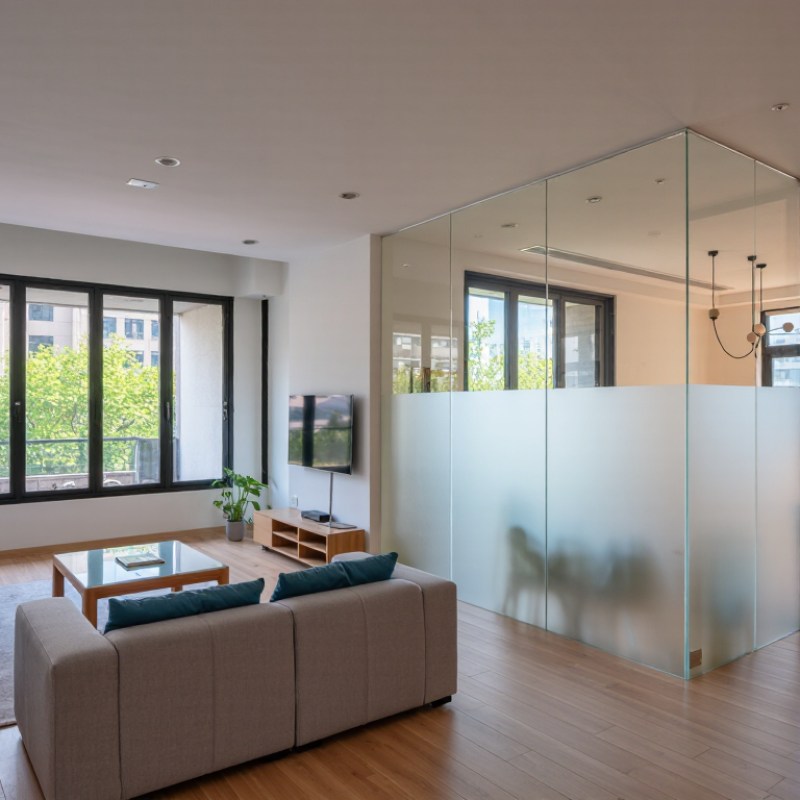
Glass is a solid material made mainly from silica, often combined with other ingredients to improve strength, clarity, or heat performance. In a room, its most noticeable job is letting daylight pass while separating spaces. A clear pane can keep a hallway visually connected to a bright living room. The wall remains, but it feels less final.
This effect comes from light and sightlines, not extra floor area. When windows show trees or open sky, the eye reads the view as part of the room. Interior glass doors can carry light into a dim corridor, while translucent glass softens outlines where privacy matters. Clear, frosted, tinted, and patterned glass each handle light differently. Details matter. Frame width, surface glare, and the direction of sunlight can change the result.
Glass can also reflect lamps and furniture, adding apparent depth, though reflections may create visual clutter. It is not a magic fix. A small, poorly lit room will not suddenly feel spacious just because one panel is transparent. Safety, cleaning, heat gain, and privacy deserve attention when choosing a location and finish. A sample held beside the actual window often tells more than a showroom display. Sometimes, a solid wall simply feels calmer.
Clear glass lets daylight and sightlines pass through. A glass door can reveal a bright room beyond a narrow hallway. The floor stays put.
Frosted or reeded glass blurs details and softens direct views. At night, strong light behind the panel may reveal shadows. Check a sample near a lamp.
Mirrors reflect bright areas and create another layer of depth. Their effect depends on what they reflect; a cluttered view may not help.
Low-iron glass can reduce the green tint along exposed edges. Standard clear glass suits many spaces. It is not magic.
Place it where it can borrow light from a bright window. Keep the adjoining sightline tidy, since clear panels show clutter.
Laminated glass has an interlayer that helps hold broken pieces together. Tempered glass breaks into smaller fragments. Ask a qualified installer which type suits the panel, frame, and location.
Slim frames interrupt less of the view and can define a workspace without blocking it completely. Check how the frame looks in your room.
View samples in the actual room, in morning and evening light. Warm wood and cool ceiling lights can change how a finish looks. I still find this easy to misjudge.
Glass is a versatile material that can shape the way an interior feels, not just how it looks. In China’s interior design, common options include clear, frosted, tinted, textured, and laminated glass, each offering a different balance of openness, privacy, safety, and style. By allowing daylight to pass through and reducing visual barriers, glass can connect separate areas and create a greater sense of depth. This is how glass improves the visual space of interiors, making rooms feel brighter and more expansive without changing their actual dimensions.
Glass can be used in partitions, doors, bathroom enclosures, balustrades, and selected furniture to help light travel through a room. The best choice depends on the purpose of each space: clear glass suits areas where openness is preferred, while frosted or textured glass can provide privacy without blocking all the light. For everyday use, consider appropriate safety features, the amount of natural light, and how the finish will complement the interior’s overall style.

 Greensina Glass