How to Improve Glass Durability in Buildings?

Time:2026-10-02 Author:Sophia
0%

Glass appears permanent, yet building exposure can quietly reduce its performance. Rainwater carries alkaline dust across façades. Salt settles near coastal windows. Repeated heating and cooling create stress around edges, holes, and frame contacts. Small scratches can also become serious flaws when wind pressure repeatedly flexes the pane. Understanding what factors affect glass durability in buildings therefore requires more than checking glass thickness.

Dr. K. J. D. Mackenzie, a respected glass-science researcher, has stated, “Durability depends on the environment as much as on the glass itself.” That principle remains practical on construction sites. A chemically resistant glass may still fail when incompatible sealants, trapped moisture, poor drainage, or careless handling are involved. The weakest detail often controls the service life.

This guide examines glass composition, surface damage, thermal movement, water exposure, installation quality, and maintenance. It also considers laminated, tempered, coated, and insulated glass systems. A façade that looks clean may hide corrosion around spacers or pressure points behind gaskets. That deserves inspection.

Experience suggests that durability is not achieved by choosing the strongest product alone. It comes from matching the glass, framing system, climate, cleaning methods, and expected loads. Designers sometimes focus heavily on laboratory results. Real buildings are less cooperative. Dust, rushed installation, and neglected seals can change the outcome. Some assumptions will need questioning. Testing helps, but thoughtful detailing and regular observation often decide whether glass remains safe, clear, and functional for decades.
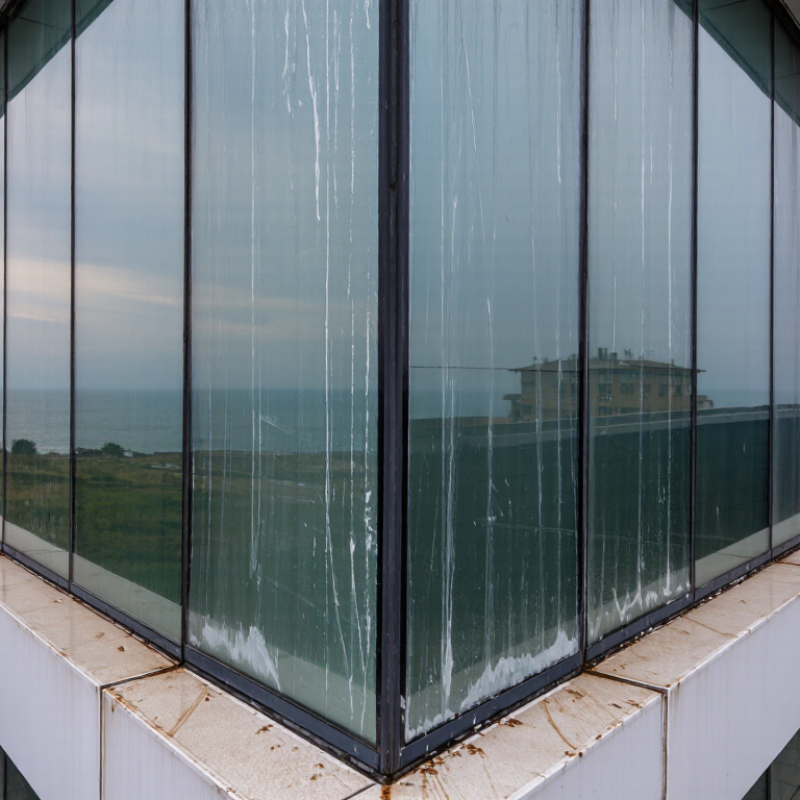
How to Improve Glass Durability in Buildings?

Understanding the Factors That Affect Glass Durability in Buildings

Glass durability in buildings depends on more than thickness. Glass type, heat treatment, edge quality, and installation conditions all influence service life. For example, tempered glass resists impact better, while laminated glass can retain fragments after breakage. However, neither option solves every risk.

Thermal stress is a common concern near shaded windows, dark blinds, or uneven sunlight. One section may heat quickly while another stays cool. This temperature difference can create cracks, especially around damaged edges. Frames also need room for movement. Rigid fixing can transfer building settlement or wind pressure directly into the glass. Moisture trapped around seals may cause staining, corrosion, or hidden deterioration. Regular inspections should check edges, gaskets, drainage paths, and small chips. A tiny defect deserves attention. It may grow under repeated temperature changes.

Tips: Specify glass according to location, load, and exposure. Protect edges during transport and handling. Keep metal tools away from finished surfaces. Use compatible setting blocks and sealants. Avoid applying reflective films without checking thermal-stress risks. Clean with soft tools and approved methods. After installation, photograph unusual marks and record inspection dates. This sounds basic, but records are often incomplete. That weakness makes later decisions less reliable. Qualified professionals should verify calculations, local requirements, and the condition of supporting frames before replacement or repair.

Selecting Glass Types for Specific Building Conditions

Selecting glass by appearance alone can shorten a building’s service life. Start with exposure. Coastal façades face salt, wind, and driving rain. High-rise façades need verified wind-load resistance and safe breakage behavior. Tempered glass suits impact-prone areas, while laminated glass retains fragments after breakage. Heat-strengthened glass can reduce thermal-stress risk without matching tempered glass’s full strength.

Climate should guide coating and assembly choices. Low-emissivity coatings limit heat transfer, while solar-control coatings reduce unwanted summer gains. The U.S. Department of Energy estimates that windows can represent 25–30% of residential heating and cooling energy use. This figure is not a universal commercial-building result, but it signals the design stakes. In hot climates, combine solar control with insulated glazing and carefully sized shading. In cold climates, prioritize low U-values and warm-edge spacers.

Site conditions matter more than brochures suggest. On site, I have seen a suitable glass type fail after poor edge protection and uneven frame drainage. Water trapped near the lower seal can accelerate deterioration. The International Energy Agency’s 2023 buildings report links buildings with roughly 30% of global final energy demand, making operational performance difficult to ignore. Specify glass with tested thermal, acoustic, safety, and wind properties. Check the complete assembly, not only the pane. A stronger pane cannot compensate for weak seals, incorrect clearances, or careless installation. That is where many specifications become overly optimistic.

Designing Frames and Supports to Reduce Glass Stress

How to Improve Glass Durability in Buildings?

Glass durability often depends on the frame, not the glass alone. Uneven support can create pressure points along the edges. These points may develop into cracks after temperature changes, wind movement, or repeated opening cycles.

ASTM E1300/E1300M evaluates glass thickness against wind-load conditions and probability of breakage. Designers should use these calculations before selecting glass. The 2023 Global Status Report for Buildings and Construction reports that buildings represent about 34% of global energy demand. Better frames can support both durability and thermal performance.

Continuous setting blocks, controlled edge clearances, and flexible gaskets help glass move slightly without binding. A rigid frame may look precise. It can still transfer harmful stress.

Tips:

  • Keep drainage paths open.
  • Check frame squareness on site.
  • Separate glass from metal with compatible setting materials.
  • Avoid forcing oversized panes into narrow rebates.
  • Inspect corners carefully, where stress often concentrates.

Installation quality deserves more attention. Clean support surfaces prevent tiny debris from creating local loads. Glass should remain centered, with tolerances confirmed by the project engineer.

The International Building Code and relevant local standards also require design checks for wind, human impact, and safety glazing. However, field conditions rarely match drawings perfectly. That is where projects can fail.

A second inspection is inexpensive compared with replacing a cracked panel. Temperature, shading, and nearby heating sources should also be reviewed, because uneven heating can produce thermal stress.

Applying Protective Treatments and Surface Technologies

Improving glass durability begins at the surface. Protective treatments can reduce scratching, staining, mineral deposits, and weather-related haze. Hydrophobic coatings repel rainwater, while photocatalytic surfaces help break down organic dirt under daylight. These treatments are useful on façades near roads, coastlines, and construction zones.

UNEP’s 2024 Global Status Report says buildings account for 32% of global energy use and 34% of carbon dioxide emissions. Durable glass supports longer service life and fewer replacement cycles. Low-emissivity coatings also limit heat transfer, although they must be protected during fabrication, transport, and installation.

The U.S. Department of Energy reports that windows can cause about 25% of residential heating and cooling energy loss. Surface technology therefore affects both resilience and operating performance.

Installation quality remains decisive. A hard coating cannot compensate for abrasive cleaning, metal-to-glass contact, or trapped grit. Neutral cleaners and soft tools should replace rough pads. Edge protection is equally important for laminated and insulated units.

Site teams should inspect coating uniformity, visible scratches, sealant contact, and drainage paths before handover. Standards such as ASTM C1376 and ISO 9050 provide useful performance frameworks, but field exposure can be harsher than laboratory testing.

That gap deserves attention. A coating may perform well in testing yet fail early beside salt spray, dust, or repeated thermal movement. Regular inspection records make these weaknesses easier to trace.

Establishing Installation, Inspection, and Maintenance Practices

Glass durability depends less on thickness alone than on disciplined installation, inspection, and maintenance.

During installation, confirm the specified glass type, heat-treatment status, edge quality, setting blocks, and drainage paths. Glass should never touch metal directly. Sealants and gaskets must remain compatible with the glass and frame materials. Small defects grow. Field inspections often find blocked weep holes, uneven support, and sealant gaps around corners.

The U.S. Department of Energy reports that windows can account for 25–30% of residential heating and cooling energy use. Damaged seals increase heat transfer and may allow moisture into the frame. The International Energy Agency’s 2023 Global Status Report for Buildings and Construction also identifies buildings as responsible for about 30% of global final energy demand. Durable glazing supports both safety and operational efficiency.

Schedule a visual inspection after installation, then at least annually, with extra checks after storms or nearby construction. Record cracks, scratches, condensation, hardware movement, and sealant separation with photographs. Document everything. ASTM standards can guide glass performance testing, but site conditions still require professional judgment.

Tips: Clean glass with mild detergent, soft tools, and clean water. Avoid abrasive pads and unapproved scrapers. Keep drainage channels open. Do not apply films, stickers, or coatings without checking thermal-stress risks. Inspect edges closely; damage there may be difficult to notice. A checklist helps, but it is not perfect. Review recurring defects and adjust installation details instead of repeating the same mistake.

FAQS

Why can a strong glass panel still crack?

Uneven framing can create pressure points along the edges. Small stresses grow. Temperature changes, wind, and repeated movement may trigger cracks.

How should a frame support glass safely?

Use continuous setting blocks, controlled edge clearances, and flexible gaskets. Keep glass centered within the frame. Avoid forcing a large panel into a narrow rebate.

What should installers inspect before placing glass?

Check frame squareness, support surfaces, glass edges, and drainage paths. Remove grit and tiny debris. Even a small stone can create a dangerous local load.

Why are drainage paths important?

Open drainage channels help remove water from the frame. Blocked paths can trap moisture and damage seals. Water has a way of finding weak points.

Can protective surface treatments improve glass durability?

Hydrophobic treatments can repel rainwater and reduce mineral deposits. Other surfaces can limit organic dirt under daylight. They still need careful handling.

How can workers protect treated glass during installation?

Use neutral cleaners, soft tools, and clean water. Prevent metal-to-glass contact. A hard coating cannot repair abrasive cleaning damage.

How often should building glass be inspected?

Inspect it after installation and at least once each year. Check again after storms or nearby construction. Record cracks, scratches, condensation, sealant gaps, and hardware movement.

What signs suggest that a glass system needs attention?

Look for edge damage, blocked weep holes, uneven support, and sealant separation. Condensation may indicate failed seals. Do not ignore small defects.

Can energy performance affect glass durability decisions?

Yes. Better frames and sealed glazing can reduce heat transfer. Windows may account for roughly 25–30% of household heating and cooling energy use. Thermal improvement must not create new stress.

Are checklists enough for reliable glass maintenance?

No. A checklist helps, but it can miss changing site conditions. Review repeated defects and adjust installation details. The same mistake should not become a maintenance routine.

Conclusion

Improving glass durability in buildings begins with understanding what factors affect glass durability in buildings, including temperature changes, wind pressure, impact risk, moisture, ultraviolet exposure, chemical contact, and building movement. Selecting the right glass type for the location and purpose is essential. Different conditions may require stronger, laminated, insulated, or specially treated glass to improve resistance and safety. Careful frame and support design also helps distribute loads evenly, prevent edge damage, and reduce stress caused by poor alignment or structural movement.

Protective coatings and surface technologies can further limit scratching, staining, solar damage, and moisture-related deterioration when chosen for the building’s environment. However, durable performance depends equally on proper installation. Qualified workers should use compatible materials, maintain correct clearances, and avoid pressure points during fitting. Regular inspections and maintenance should check for cracks, seal failure, corrosion, drainage problems, and changes in support conditions. Early repairs, gentle cleaning methods, and timely replacement of damaged components can extend service life, preserve appearance, and improve the overall safety and reliability of building glass.

Sophia

Sophia

Sophia is a dedicated marketing professional with an exceptional depth of knowledge about her company's products and services. With a keen understanding of market trends and customer needs, she crafts insightful blog posts that not only inform but also engage readers, enriching the company’s online......