Top 10 Reasons Why Glass Is Used in Commercial Buildings?

Time:2026-09-22 Author:Sophia
0%

Glass has become a defining material in commercial architecture. It covers office façades, hotel entrances, retail storefronts, and interior partitions. But appearance alone does not explain its popularity. This article explores why glass is used in commercial buildings and how it supports practical design goals.

Daylight can reach deeper work areas through carefully planned glazing. That may create brighter interiors and reduce dependence on electric lighting during suitable hours. Transparent façades also improve visual connection between occupants, streets, courtyards, and landscaped spaces. In busy offices, this connection can make a space feel less enclosed. Glass supports flexibility, too. It can divide meeting rooms without creating heavy visual barriers.

Performance matters more than shine.

Modern commercial glazing can include insulated units, low-emissivity coatings, solar-control layers, and laminated safety glass. These systems may improve thermal comfort, noise control, durability, and occupant safety. Architects and building specialists normally assess orientation, climate, shading, frame design, maintenance access, and local building requirements before selecting glass. A south-facing façade may need different treatment from a shaded northern elevation.

Still, glass is not automatically sustainable or comfortable. Poorly designed façades can cause glare, overheating, heat loss, bird-collision risks, and demanding cleaning schedules. That is an important limitation. The following ten reasons examine glass with a balanced view, linking its visual appeal to measurable performance and real construction experience. Good design uses glass deliberately, not everywhere.
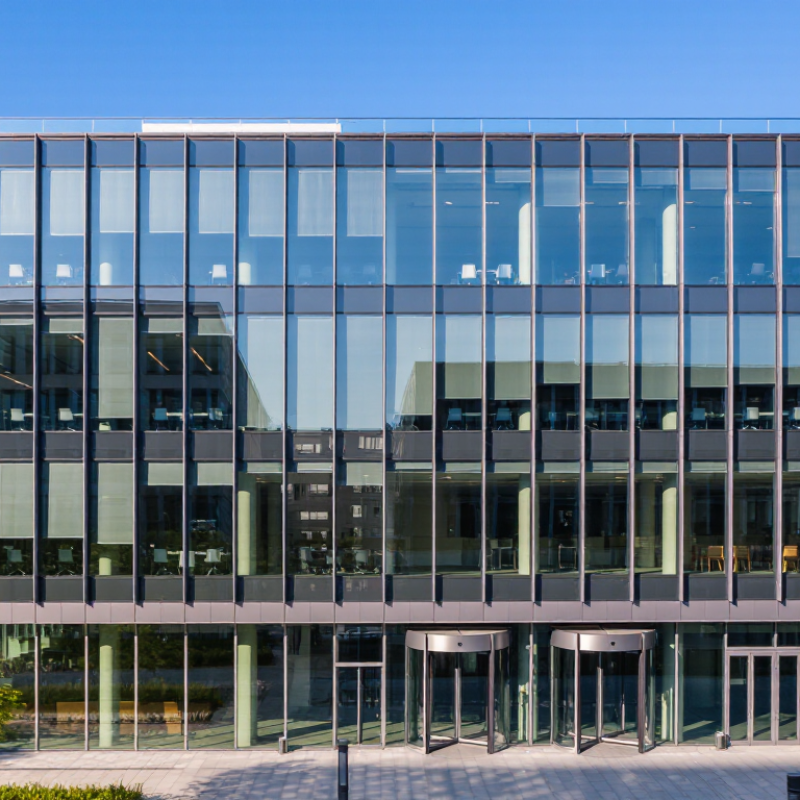
Top 10 Reasons Why Glass Is Used in Commercial Buildings?

What Glass Is and Why It Suits Commercial Architecture

Glass is an amorphous material made mainly from silica, with sodium and calcium compounds added for stability. It transmits daylight while separating occupants from wind, rain, and urban noise. That combination explains its popularity in commercial buildings. Clear façades can make a lobby feel open, even on a crowded street.

The material also supports measurable building performance. The UNEP 2023 Global Status Report states that buildings and construction consumed about 32% of global energy and produced 34% of energy-related emissions in 2022. Better glazing can help reduce this burden. Low-emissivity coatings limit radiant heat loss, while solar-control glass reduces unwanted summer gains. The U.S. Department of Energy also reports that daylight-responsive lighting controls can reduce lighting energy use, although results depend heavily on shading, orientation, and controls. Glass is not automatically sustainable. An oversized west-facing façade can create glare, overheating, and uncomfortable workstations. I have seen beautiful interiors become difficult to use after noon.

Tips: Specify U-values, solar heat gain coefficients, visible transmittance, and acoustic ratings together. Pair glass with external shading, insulated frames, and operable controls. Review mock-ups at morning and afternoon. Numbers on a specification sheet may not reflect real comfort. The design should be tested, not merely admired.

Top 10 Reasons Why Glass Is Used in Commercial Buildings

Glass suits commercial architecture because it combines daylight access, transparency, thermal performance, safety, acoustic control, and design flexibility. The chart shows representative visible light transmittance values for common architectural glass types; actual performance varies by thickness, coating, tint, and glazing assembly.

Why Glass Suits Commercial Architecture

  • Maximizes natural daylight and can reduce dependence on electric lighting.
  • Provides clear views and improves visual connection with the surrounding environment.
  • Supports solar-control strategies through tinting, coatings, frits, and reflective surfaces.
  • Improves thermal performance when used in insulated and low-emissivity glazing units.
  • Can provide safety and security when manufactured as tempered, laminated, or reinforced glass.
  • Helps control sound transmission with laminated and insulated glass assemblies.
  • Offers fire-rated options for specific commercial building applications.
  • Resists moisture, corrosion, and many common cleaning chemicals.
  • Provides extensive design flexibility through colors, patterns, curves, textures, and digital treatments.
  • Creates a clean, durable, and visually lightweight building envelope.

Chart note: Values are representative visible light transmittance percentages for commonly specified architectural glass categories, not guaranteed product specifications.

How Glass Maximizes Natural Light and Reduces Energy Use

Glass is widely used in commercial buildings because it turns daylight into a practical energy resource. The International Energy Agency’s Buildings 2023 report states that buildings consume about 30% of global final energy. Better daylighting can reduce dependence on electric lighting, especially in offices, schools, and retail spaces. The U.S. Department of Energy’s 2018 Commercial Buildings Energy Consumption Survey reports that lighting uses about 17% of commercial building electricity. That makes every usable ray valuable.

The gain is real. But glass is not magic. Large windows can create glare, overheating, and higher cooling demand when orientation is ignored. High-performance glazing with a suitable U-factor, solar heat gain coefficient, and low-emissivity coating can limit these problems. External shading works better than blinds alone because it blocks sunlight before heat enters the room. A north-facing clerestory may spread soft light across desks, while a west-facing curtain wall can produce harsh afternoon glare. Design details matter.

Research from Lawrence Berkeley National Laboratory shows that windows affect lighting, heating, and cooling together. Therefore, energy performance must be measured as a whole system, not by visible transparency alone. A bright lobby may look efficient but still waste energy if its cooling system runs constantly. This is where professional simulation and post-occupancy monitoring become essential. Even careful designs can miss seasonal behavior. That uncertainty deserves honest review.

Top 10 Reasons Why Glass Is Used in Commercial Buildings? - How Glass Maximizes Natural Light and Reduces Energy Use
No. Reason Typical Design Metric Measured or Expected Benefit How It Supports Building Performance
1 Maximizes natural daylight Visible transmittance (VT): approximately 0.40–0.70 for many commercial glazing systems Daylight can reach deeper into perimeter work areas, depending on window size, room depth, interior reflectance, and shading. Reduces dependence on electric lighting during suitable daytime conditions and improves visual connection with the outdoors.
2 Reduces lighting electricity use Daylight-responsive lighting controls can reduce lighting energy in daylit zones by approximately 20%–40% in well-designed applications Automatic dimming or switching lowers electric-light output when sufficient daylight is available. Lower lighting consumption also reduces internal heat gains, which can reduce air-conditioning demand.
3 Improves thermal insulation with low-emissivity coatings Typical high-performance double glazing: about 1.4–2.0 W/m²·K center-of-glass U-value Low-emissivity coatings and insulated cavities limit long-wave radiant heat transfer through the window. Lower heat flow can reduce winter heating demand and improve interior surface temperatures near the façade.
4 Controls unwanted solar heat gain Solar heat gain coefficient (SHGC) of approximately 0.25–0.40 is common for solar-control glazing Less solar radiation enters the building during cooling periods, particularly on east-, west-, and highly exposed façades. Can reduce peak cooling loads and help downsize cooling equipment when coordinated with orientation and external shading.
5 Enables useful passive solar heating South-facing winter-oriented glazing may use a higher SHGC, often around 0.40–0.60, where climate and shading permit Solar radiation entering through appropriately oriented glazing can provide useful heat during heating seasons. Supports passive-solar strategies when combined with thermal mass, seasonal shading, and suitable building controls.
6 Supports effective façade shading strategies External overhangs, fins, louvers, and recessed windows can block a substantial portion of high-angle or low-angle direct sun Shading reduces glare and solar heat before it reaches the interior glass surface. External shading is often more effective for cooling-load reduction than relying on interior blinds alone.
7 Provides views and visual connection to the outdoors Common daylighting guidance considers regularly occupied spaces, view access, glare control, and adequate view quality together Windows can provide exterior views, daylight variation, and orientation cues for occupants. Supports workplace quality and occupant comfort when window-to-wall ratio, glare, privacy, and solar exposure are carefully balanced.
8 Improves occupant comfort with spectrally selective glass Spectrally selective glazing can maintain relatively high VT while using a lower SHGC than clear glass More visible light can enter while selected infrared solar energy is rejected. Helps balance daylight availability, glare management, and cooling performance without simply making the glass very dark.
9 Supports building-energy monitoring and responsive controls Automated blinds, dimming systems, and occupancy controls can respond to daylight, solar exposure, and room use Controls can adjust shading and electric lighting to changing weather and occupancy conditions. Combining glazing with controls helps avoid the energy penalties caused by excessive glare, overheating, or unnecessary lighting.
10 Offers durable, recyclable façade material Glass can be recycled repeatedly without a fundamental loss of material quality when properly collected and processed Durable glazing can serve for decades when correctly specified, installed, maintained, and protected from impact or thermal stress. Long service life and recyclability can support lifecycle objectives, although the total environmental impact also depends on framing, coatings, transport, and replacement rates.
Data note: Values are representative planning ranges rather than guarantees. Actual performance depends on climate, orientation, window-to-wall ratio, glass and frame configuration, shading, airtightness, interior layout, lighting controls, occupancy, and HVAC operation. U-values are shown in SI units; 1.4–2.0 W/m²·K is approximately 0.25–0.35 Btu/h·ft²·°F.

Why Glass Supports Flexible, Attractive, and Modern Building Design

Glass supports flexible, attractive, and modern design because it changes how commercial space behaves. In commercial projects, clear partitions can divide meeting rooms without making corridors feel narrow. A tenant may need an open studio this year and private offices later. Demountable glazed systems can make that change less wasteful. Daylight reaches deeper into floor plates, reducing electric lighting during working hours. The result is not automatically better. Glare can make screens unreadable.

Good design teams study sun paths, occupant patterns, and local climate before selecting glass. Low-emissivity coatings, external shading, and carefully placed openings can improve comfort. A lobby with tall glazing feels welcoming when its entrance remains warm, visible, and easy to navigate. Acoustic laminated glass can soften traffic noise near busy streets.

Details matter. Frames, seals, drainage, and cleaning access influence performance over decades. Site observations often reveal problems that drawings miss, such as afternoon heat beside a west-facing wall.

Glass also supports a building’s changing identity. Frosted sections can provide privacy, while transparent zones preserve visual connection between departments. However, too much transparency may expose workers, distract visitors, or create an institutional atmosphere.

I have found that balanced contrast usually feels more human than an uninterrupted glass surface. Safety, energy modeling, accessibility, and maintenance reviews should guide the final specification.

A beautiful façade is a weak success if occupants keep blinds closed all day. Flexible design requires restraint, not glass everywhere.

How Glass Improves Visibility, Safety, Comfort, and Occupant Well-Being

Top 10 Reasons Why Glass Is Used in Commercial Buildings

How Glass Improves Visibility, Safety, Comfort, and Occupant Well-Being

Glass helps connect people with their surroundings. In commercial buildings, clear sightlines can guide visitors, support supervision, and reduce hidden corners. Daylight may also lower dependence on electric lighting during working hours. From experience, employees often feel less confined when windows provide views of trees, streets, or open courtyards. These benefits are real, but they depend on thoughtful design.

Safety needs more than transparency. Laminated or tempered glass can reduce injury risks when correctly specified and installed. Visible markings help people notice large glass doors and partitions. Energy-efficient glazing can limit heat gain, while acoustic glass may soften traffic noise. Comfort improves. Not always.

Tips: Match glass to each room’s exposure, use shading where glare occurs, and check reflections from screens. Ask qualified professionals to review impact resistance, edge details, ventilation, and local building requirements. A bright lobby can still feel uncomfortable if sunlight strikes the reception desk for hours.

Glass also supports occupant well-being through daylight, visual connection, and a stronger sense of openness. However, fully transparent spaces may reduce privacy and increase distraction. Frosted sections, curtains, internal blinds, or carefully placed furniture can create balance. Designers should test these choices at different times of day, not only during a polished presentation. Small oversights matter.

What Makes Glass Durable, Sustainable, and Economical for Commercial Buildings

Top 10 Reasons Why Glass Is Used in Commercial Buildings

What Makes Glass Durable, Sustainable, and Economical for Commercial Buildings

Glass brings daylight into offices, retail spaces, hotels, and public buildings. Daylight can reduce dependence on electric lighting during working hours. It also makes narrow interiors feel more open and comfortable. However, good results depend on proper orientation, shading, and window placement. More glass does not automatically mean better design.

Modern architectural glass can be heat-treated, laminated, or insulated for specific building conditions. Tempered glass offers improved resistance to thermal stress and impact. Laminated glass helps hold fragments together if breakage occurs. Low-emissivity coatings can reduce unwanted heat transfer through the facade. These details support longer service life and more stable indoor temperatures. Installation quality matters just as much.

Glass can support sustainability when its full lifecycle is considered. Recyclable materials, efficient coatings, and durable frames may reduce replacement needs. A well-designed facade can lower heating and cooling demand, especially when solar exposure is carefully modeled. Energy savings are not guaranteed. Poorly shaded glass can create glare, overheating, and higher air-conditioning costs. That is an uncomfortable design lesson.

Maintenance is another economic factor. Smooth glass surfaces are easy to inspect and clean, but tall facades require safe access systems. Damaged seals, scratches, and water leaks should be recorded early. Facility teams often save money through routine inspections rather than emergency replacement. The calculations are not glamorous. They are practical, and they protect long-term building performance.

FAQS

What makes glass suitable for commercial buildings?

Glass transmits daylight while blocking wind, rain, and urban noise. It can make a crowded lobby feel open and welcoming. The effect depends on orientation, shading, and detailing.

Can glass reduce building energy use?

Low-emissivity coatings can reduce radiant heat loss. Solar-control glass can limit unwanted summer heat. Daylight-responsive lighting may reduce electric lighting demand. Results vary greatly.

Is a larger glass façade always better?

No. An oversized west-facing façade may cause glare and overheating. Afternoon sunlight can make desks and reception areas uncomfortable. More glass is not automatically more sustainable.

Which performance values should designers specify?

Review U-values, solar heat gain coefficients, and visible transmittance together. Include acoustic ratings for noisy streets. These numbers need context. A perfect specification can still disappoint occupants.

How can glass improve visibility inside commercial buildings?

Clear sightlines can guide visitors and reduce hidden corners. They may also support supervision in shared areas. Views of trees, streets, or courtyards can reduce a confined feeling.

How can glass improve safety?

Laminated or tempered glass can reduce injury risks when properly selected. Visible markings help people notice large doors and partitions. Qualified professionals should review impact resistance and edge details. Transparency alone is not safety.

How can designers control glare and overheating?

Pair glazing with external shading, insulated frames, and operable controls. Check reflections on computer screens during morning and afternoon reviews. Test a physical mock-up when possible. Renderings are not enough.

Does glass provide privacy and comfort?

Fully transparent spaces may increase distraction and reduce privacy. Frosted sections, curtains, internal blinds, or furniture can create balance. Acoustic glass may soften traffic noise. Comfort improves. Not always.

How should designers evaluate glass at different times?

Review the building in morning and afternoon conditions. Observe sunlight on desks, reception counters, and walkways. Check ventilation, reflections, noise, and changing views. Small oversights matter.

Conclusion

Glass remains a preferred material in commercial architecture because it combines practical performance with visual appeal. Understanding why glass is used in commercial buildings begins with its ability to bring abundant natural light into offices, retail spaces, and public facilities. Better daylight can create a more pleasant atmosphere while reducing dependence on artificial lighting and supporting energy efficiency. Glass also offers flexibility in design, allowing architects to create open interiors, attractive façades, spacious entrances, and modern layouts that can adapt to changing business needs.

In addition to improving visibility and connection with the surrounding environment, properly designed glass systems can support safety, privacy, thermal comfort, and occupant well-being. Modern glass can be engineered for strength, insulation, solar control, and noise reduction, helping buildings remain comfortable and secure. It is also durable, recyclable, and relatively easy to maintain, which can lower long-term operating costs. By balancing appearance, performance, sustainability, and economy, glass provides a versatile solution for many commercial building requirements.

Sophia

Sophia

Sophia is a dedicated marketing professional with an exceptional depth of knowledge about her company's products and services. With a keen understanding of market trends and customer needs, she crafts insightful blog posts that not only inform but also engage readers, enriching the company’s online......