Decorative glass is appearing in room dividers, cabinet fronts, shower screens, and feature doors. Its appeal is practical as well as visual: a reeded panel can soften a view while still letting daylight pass through. That balance helps explain why decorative glass is trending in interior design, especially in homes where open plans need a little more privacy. Light still travels. The space feels less exposed.
Architect Louis Kahn once observed, “The sun never knew how great it was until it hit the side of a building.” His remark was not about decorative glass, but it captures why changing light matters in a room. Textured, tinted, or patterned glass can scatter daylight across a wall and alter the mood from morning to evening. The effect depends on placement, orientation, and the glass finish. A sample that looks subtle in a showroom may feel busy beside strong sunlight.
Designers also value glass for its range. A fluted panel can add texture to a kitchen without making cabinetry feel heavy; a translucent divider can separate a workspace without blocking every sightline. Still, glass is not a cure-all. It shows fingerprints, needs appropriate cleaning, and may offer less privacy than expected at night. Details matter. This introduction explores the main reasons behind the trend, while considering where decorative glass works well—and where a more reflective choice may be needed.
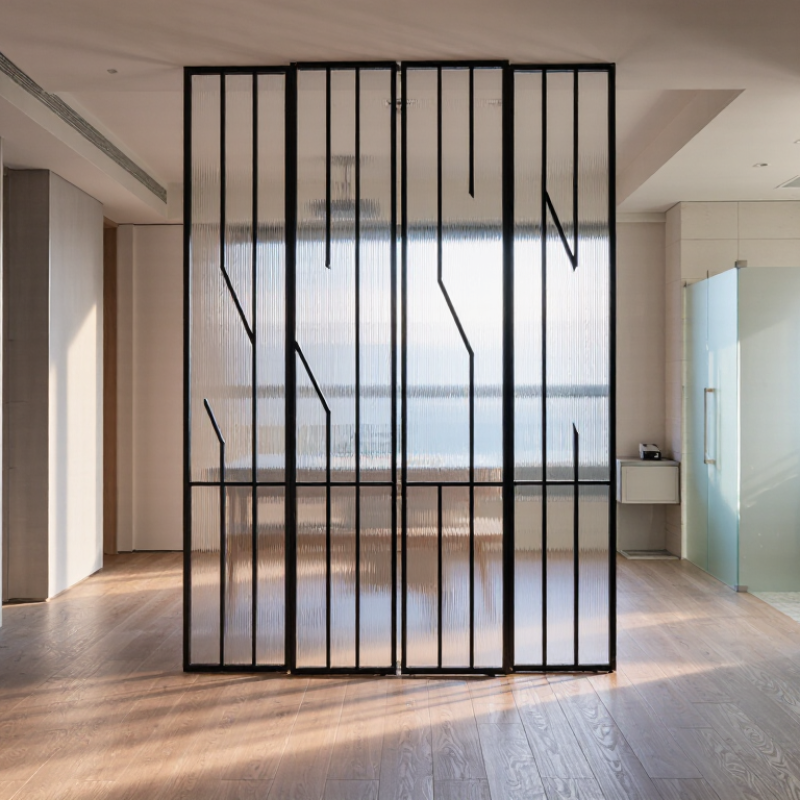
Decorative glass is ordinary architectural glass altered to control light, privacy, color, or texture. A reeded panel softens the view of a hallway; a frosted shower screen scatters light while obscuring detail. The effect can come from the glass itself or from a finish applied afterward. Small flaws matter. A pattern that looks subtle in a sample may feel busy across a full door.
Most products begin with a glass batch, often based on silica sand, soda ash, and limestone. In the float process, molten glass spreads over a bath of molten tin, forming a flat sheet that is cooled gradually. The U.S. Department of Energy’s 2017 Bandwidth Study on U.S. glass manufacturing describes melting as a major energy-consuming stage; soda-lime glass is typically melted near 1,500°C. After cooling, manufacturers may etch, sandblast, roll, coat, laminate, or heat-treat the sheet. These methods create different looks and performance. Etching removes a thin surface layer for a matte finish, while rolling can press a repeatable texture into hot glass. Heat treatment improves strength, but not every decorative process suits every installation. Check samples in the actual room light.
Top Reasons Decorative Glass Is Trending in Interior Design
Key Properties That Shape Its Design Appeal
Decorative glass earns its place through light, privacy, texture, and visual depth. Fluted panels blur a hallway view while letting daylight pass between rooms. Frosted or patterned surfaces soften reflections and add tactile interest without heavy visual mass. The effect changes with the light; a subtle showroom sample may look busy beside a bright window.
Light matters. The U.S. Department of Energy’s Energy Saver guidance says lighting uses about 15% of electricity in an average American home. Glass can help daylight reach interior areas, but placement, orientation, and glare control shape the result. It is not an automatic energy upgrade. ASID’s 2024 Trends Outlook also highlights wellness and sustainability as design priorities, reflecting interest in brighter, more comfortable spaces.
Tips: Test a large sample beside the actual window, morning and afternoon. Pair textured glass with simple hardware; too many finishes can make a small room feel restless. Fingerprints need attention, too.
Decorative glass is gaining popularity because it brings color, texture, and light into rooms without making them feel crowded. Fluted panels soften a view of a home office. A translucent partition lets daylight pass while offering some privacy. Houzz’s 2024 U.S. Kitchen Trends Study found that 71% of renovating homeowners upgraded their backsplash, showing how often people now treat this surface as a design feature, not just a protective layer.
Market figures point to broader interest in glass in buildings. Grand View Research valued the global architectural glass market at US$61.5 billion in 2023 and forecast 6.6% annual growth from 2024 to 2030. That category includes more than decorative products, so it is not proof of demand for any one finish. Still, it reflects glass’s expanding role in contemporary interiors, from cabinet inserts to room dividers.
Practical details matter, too. Glass is easy to wipe clean, and patterned or colored finishes can make a small entry feel more considered. But it shows fingerprints. Some textures also collect dust along their edges, and custom panels need careful measuring and installation. The material can feel warm and inviting, though not every room benefits from more shine.
Decorative glass is finding a place in rooms where people want light without giving up every bit of privacy. In open-plan homes, fluted or frosted panels can separate a dining area from a hallway while keeping daylight moving through the space. They also work as sliding doors, shower screens, and cabinet fronts. The texture matters: narrow vertical ribs can soften reflections, while etched patterns create a quieter, more private surface.
In kitchens, a patterned glass backsplash can bring color behind a sink or cooktop and is generally easy to wipe clean. Check how the finish handles heat and cleaning products before choosing it. In living rooms, glass panels can frame a reading nook or add detail to a built-in bookcase. A small panel can be enough. Too much pattern may compete with furniture and make a compact room feel busy.
Bathrooms are another common setting, especially for screens that balance light with privacy. Clear glass shows water spots quickly, while textured finishes can make them less noticeable, though they still need regular cleaning. For doors and partitions, the glass type and thickness should suit the opening and expected use; a qualified installer can assess support, edges, and hardware. Measurements can be unforgiving. Even a beautiful panel may feel awkward if its pattern clashes with nearby tile or the room’s natural light.
| Interior Use | Common Glass Type or Treatment | Why It Is Popular | Practical Design Consideration |
|---|---|---|---|
| Room dividers and partitions | Clear, frosted, fluted, or patterned glass | Defines separate zones while allowing daylight to pass through, helping interiors feel more open than opaque partitions. | Choose the level of transparency to balance visual connection with privacy. Use safety glazing where required by local building codes. |
| Bathroom enclosures | Frosted, textured, or clear tempered glass | Creates a clean, light-reflective surface; textured or frosted finishes can provide greater visual privacy. | Plan for water spots, cleaning access, ventilation, and suitable safety glazing. Privacy depends on the specific finish and lighting conditions. |
| Kitchen backsplashes | Back-painted, low-iron, or clear glass over a finished wall | Provides a smooth, visually continuous surface that is easy to wipe down and can reflect light around the workspace. | Confirm that the glass and installation are suitable for the location, especially near heat sources. Seams, outlets, and wall preparation affect the finished appearance. |
| Cabinet doors and display storage | Clear, reeded, tinted, or frosted glass | Breaks up solid cabinetry, adds visual depth, and can display objects without making a room feel as visually heavy. | Clear glass keeps contents visible, while textured or frosted finishes soften the view. Consider fingerprints, lighting, and the appearance of stored items. |
| Interior doors | Clear, patterned, or frosted glass panels | Brings borrowed light into hallways and enclosed rooms while adding a decorative element to a door. | Match transparency to the room’s privacy needs. Select an appropriate safety-glazing construction for the door and its location. |
| Stair railings and balustrades | Clear or low-iron laminated safety glass | Maintains sightlines and an uncluttered look while serving as a protective barrier when designed as part of a compliant system. | Glass thickness, edge support, fixings, and load requirements must be specified for the installation. Follow applicable building codes and use qualified installers. |
| Feature walls and decorative panels | Textured, colored, mirrored, or digitally printed glass | Adds color, pattern, reflectivity, or surface texture without relying on visually bulky materials. | Review samples in the actual room lighting; color and reflectivity can appear different under daylight and artificial light. Plan panel joints and mounting details. |
| Home offices and meeting areas | Frosted, translucent, or switchable privacy glass | Allows daylight to reach shared spaces while offering varying degrees of visual separation for work or meetings. | Translucent glass does not necessarily block sound. Privacy performance varies by product, finish, and viewing angle. |
Decorative glass can brighten a room while adding texture, but its appearance is only part of the decision. Consider where it will sit and what it needs to do. A fluted panel may soften views between a kitchen and dining area, while clear patterned glass can keep a hallway feeling open. Privacy varies with the pattern, lighting, and viewing angle. Check samples in the actual room. Small details matter.
Think about safety and installation, too. For doors, partitions, or areas near people, ask a qualified glass professional which glass type and thickness suit the application. Local building requirements may also affect the choice. Measure the opening carefully, including frame depth and hardware clearance. Retrofitting can become expensive. A sample may look subtle in a showroom but feel busy across a full wall, so review a larger piece if possible.
Maintenance is another practical factor. Deep textures can collect dust, and some finishes show fingerprints more clearly than others. Ask how the surface should be cleaned before selecting it, especially near cooking areas or bathrooms. Consider the light at different times of day; reflections can change the look considerably. There is no perfect option. A slightly less dramatic pattern may work better when everyday use matters more than a striking first impression.
Practical factor: visible light transmission (VLT) in common glass types
Higher VLT lets more daylight pass through, while lower VLT can provide more shading or privacy. The ranges are indicative: actual transmission varies with glass thickness, texture, tint, and coatings. Check product specifications when choosing glass for a specific space.
It is architectural glass changed to control light, privacy, color, or texture. A reeded panel, for example, can soften a hallway view.
Glass is formed into sheets, then it may be etched, sandblasted, rolled, coated, laminated, or heat-treated. Each method creates a different finish.
Not always. Privacy depends on the pattern, lighting, and viewing angle. Check the panel from both sides.
It can help daylight reach interior areas. It does not automatically reduce energy use, and glare may still be an issue.
Place a large sample beside the actual window and view it morning and afternoon. A subtle sample can feel busy across a full door.
Ask a qualified glass professional about suitable glass type and thickness. Measure the opening, frame depth, and hardware clearance carefully.
Maintenance varies by finish. Deep textures can collect dust, while some surfaces show fingerprints clearly. Ask about cleaning before choosing.
No. A quieter pattern may feel better in daily use, especially in a small room. It depends.
Decorative glass is created through processes such as etching, frosting, coloring, laminating, or adding patterns and textures to ordinary glass. These techniques give it a distinctive appearance while preserving useful qualities such as light transmission, visual depth, and, in some applications, privacy. Its versatility helps explain why decorative glass is trending in interior design: it can soften daylight, add character, and create subtle divisions without making a room feel closed off.
In modern interiors, decorative glass appears in doors, partitions, shower enclosures, cabinet fronts, windows, and feature panels. Choosing the right option involves considering the room’s lighting, desired level of privacy, style, maintenance needs, durability, and budget. Texture and color can influence how a space feels, while the glass’s finish affects both light and visibility. Thoughtful selection allows decorative glass to serve practical purposes and complement the overall design.

Greensina Glass