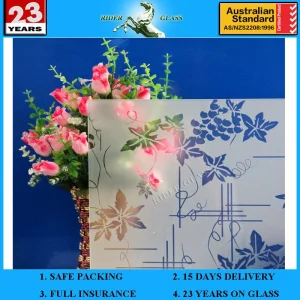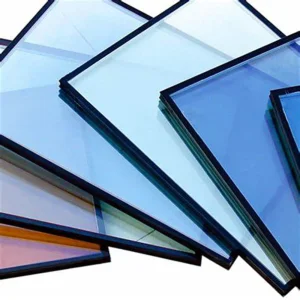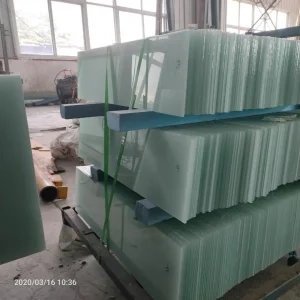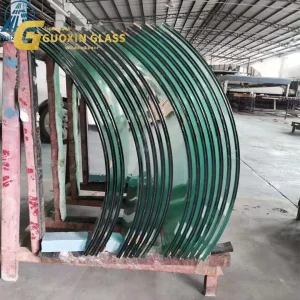
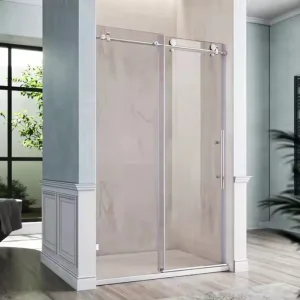
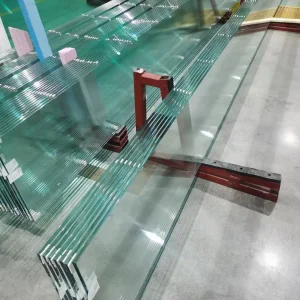
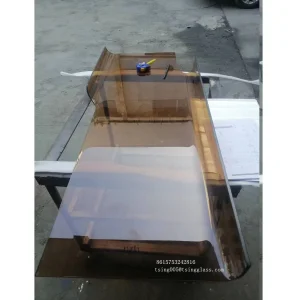
Hangzhou Greensina Glass Co., Ltd. is a professional manufacturer specializing in architectural and decorative glass solutions. Located in Hangzhou, China, the company focuses on providing high-quality glass products widely used in residential buildings, commercial spaces, offices, and interior design projects. Our main product range includes tempered glass, laminated glass, insulated glass, frosted glass, and tinted glass, all designed to meet modern requirements for safety, energy efficiency, and aesthetic appeal.
Founded in 2010, Greensina Glass has grown steadily from a small processing workshop into a reliable supplier in the architectural glass industry. The company now employs more than 90 experienced staff members, including skilled technicians, engineers, and quality control specialists. Our production facility covers an area of approximately 7,000 square meters and is equipped with advanced glass processing equipment to ensure precise manufacturing and consistent product quality.
Over the years, Hangzhou Greensina Glass Co., Ltd. has expanded its market to serve customers both domestically and internationally. Our products are exported to Europe, North America, Southeast Asia, and the Middle East. By focusing on innovation, strict quality management, and customer-oriented service, the company is committed to delivering dependable glass solutions and establishing long-term partnerships with clients worldwide.

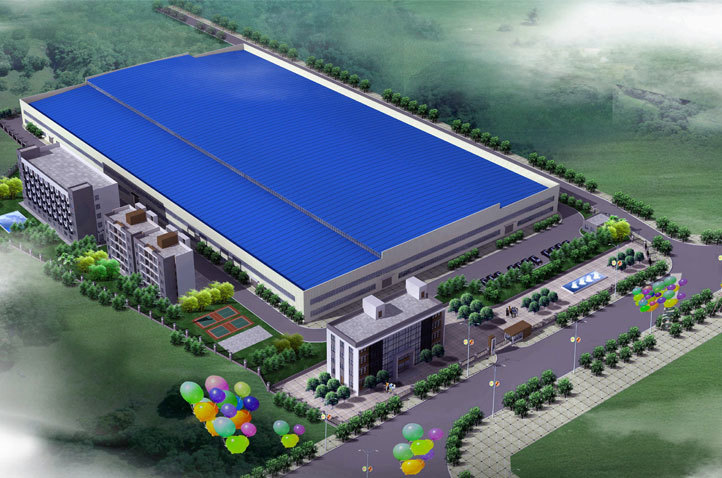
Within our 7,000-square-meter facility, Greensina Glass utilizes computer-controlled CNC double-edging machines, high-speed vertical drilling units, and convection tempering furnaces to process custom edge works, most notably the high-demand Beveled Edge Glass. Global procurement agents require exact dimensional tolerance control, and our facility operates within ±0.5mm deviation margins.
Our commitment to exporting relies on compliance. Every container packed for European and North American projects meets CE EN12150 and SGCC ANSI Z97.1 certification requirements. This ensures the structural integrity and impact breakage patterns strictly conform to high-occupancy commercial building regulations.
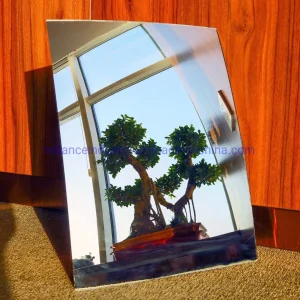
Beveled edge glass refers to glass plates whose edges are cut and polished at a specific angle to yield a sloped border, tapering down to a thinner margin. This edge treatment acts as a prism, refracting light into spectrums and creating a decorative, framed border effect that elevates architectural glazing, premium furniture, and vanity mirrors. To purchase these products effectively, global engineering teams must evaluate three technical components:
Standard bevels range from 5mm to 40mm in width, with tilt angles running from 5° to 45°. Choosing the correct combination is essential for structural stability, particularly when processing glass sheets with a nominal thickness under 6mm.
Achieving optical clarity on the slope demands a multi-stage process utilizing felt wheels and Cerium Oxide polishing slurries. Poor polishing results in haze and visible tool markings under spotlighting.
Once beveled, the residual edge thickness (often called the seam or raw edge) must be managed carefully. If the perimeter is too thin, the risk of thermal fracturing increases inside the tempering furnace.
For custom glass applications, a common design standard for mirrors and tabletops is a 25mm (1-inch) bevel on 6mm (1/4-inch) thick float glass. However, when working with thin decorative glass (3mm to 4mm), we recommend limiting the bevel width to 15mm. This preserves the core structural strength of the glass center and avoids edge chipping during transit and installation.
As a seasoned supplier, Greensina Glass matches processing setups with specific glass types. The matrix below outlines how different glass substrates handle edge shaping and tempering treatments:
The global glass processing industry is shifting toward higher sustainability, automation, and multi-functional performance. When planning your supply chain, consider these emerging developments:
Modern double-edging production lines require closed-loop water filtration systems. Greensina Glass processes edge-working cooling water to capture glass particulates, recycling 95% of the water volume to reduce our environmental impact.
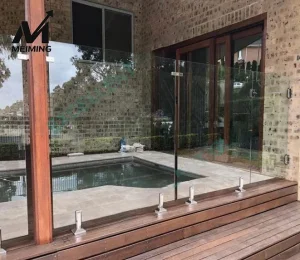
Architects are pairing beveled edges with laminated safety layouts, incorporating acoustic PVB interlayer films or SentryGlas Plus (SGP) membranes. This provides decorative aesthetics alongside high-strength structural performance.
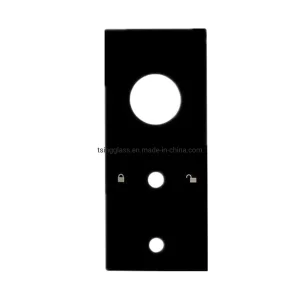
Beveled glass is increasingly used in interface touch screens and face-recognition terminals. Custom chamfers and double-sided beveling protect active touch panels, helping smart terminals blend smoothly into modern architecture.
Shipping custom and beveled edge glass across oceans requires protective packing designs. Standard shipping risks include edge chips, scratches, and damage from moisture or humidity. Greensina Glass uses a structured preparation and loading protocol to protect your order:
Our loading crews use solid, export-grade A-frame plywood crates. Each glass pane is separated by soft cork pads or paper interlayers. These spacers absorb vibrations during sea transport and prevent glass-on-glass friction.
To prevent condensation and glass clouding inside humid shipping containers, we pack desiccant bags within moisture-resistant plastic wraps inside every crate. This prevents the chemical reaction of glass weathering, ensuring your order arrives clean and clear.
Before shipment, our quality control team checks every batch. We verify the bevel depth, run light transmission tests on low-iron orders, and inspect edges under LED high-intensity lights to ensure zero micro-cracking. This quality control step prevents post-tempering failures and helps ensure your installation goes smoothly.
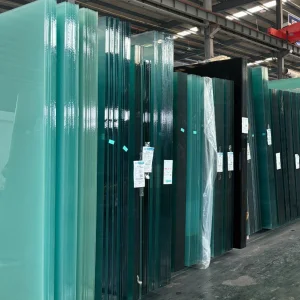
To help guide procurement decisions, here are answers to common technical and logistical questions about beveled edge glass and architectural glass sourcing:
We recommend a minimum thickness of 3mm for small decorative items, but structural and architectural applications usually require 5mm, 6mm, or thicker glass to support wider bevels without weakening the sheet's core strength.
Yes. Glass is first cut, beveled, and polished before entering our horizontal convection tempering furnace. This sequence is necessary because tempered glass cannot be cut or machined after heat treatment without shattering.
Low-iron glass features a reduced iron oxide content, which eliminates the green tint visible in standard clear glass. This clarity is especially noticeable along a polished beveled edge, where light refracts without color distortion.
Our architectural and safety glass lines meet global performance standards, including European CE EN12150 compliance and the North American SGCC (ANSI Z97.1) safety certification, qualifying them for commercial installations.
We pack orders in heavy-duty plywood crates built to withstand international transit. We place cork pads between individual sheets to prevent vibration damage, wrap crates in waterproof film, and include desiccants to control interior moisture.
Lead times depend on the size of the order and the processing details. Typically, production takes 15 to 21 days from drawing approval. This timeline allows for precise cutting, bevel grinding, polishing, tempering, and final inspection.
 Greensina Glass