Explore our top-tier catalog of custom-cut, highly durable safety and decorative glass products, designed to meet rigorous international standards.
An Expert Analysis on the Chemistry, Physics, and Mechanical Superiority of Ion-Exchange Processing.
Chemically strengthened glass represents a pinnacle of modern glass engineering, yielding values of strength, scratch resistance, and structural integrity that thermal tempering cannot match—particularly at thin profiles. The fundamental process relies on the scientific principle of ion exchange. In this thermo-chemical methodology, the glass substrate is submerged in a bath containing a molten potassium salt (typically potassium nitrate, KNO₃) at temperatures ranging between 380°C and 450°C.
During this immersion, the smaller sodium ions (Na⁺) present in the surface matrix of the glass are displaced and replaced by larger potassium ions (K⁺) from the salt bath. Because these potassium ions occupy a greater volume, their forced crowding into the surface layer of the glass structure creates a high state of compressive stress (CS). This deep compressive layer acts as a protective shield, drastically reducing the glass's susceptibility to crack propagation from surface abrasions or impacts.
Unlike thermal tempering, which cools the outer surfaces of hot glass rapidly to induce stress, chemical strengthening induces stress at an atomic level. This prevents visual distortion, preserves absolute surface flatness, and allows for strengthening of ultra-thin glass down to 0.1 mm thickness.
Through precise management of factors like salt bath purity, treatment duration, and thermal profiling, manufacturers can tailor the glass's performance to target specific technical specifications, defined primarily by Compressive Stress (CS) (measured in Megapascals, MPa) and Depth of Layer (DoL) (measured in micrometers, µm). This control makes chemically strengthened glass the standard choice for smart display cover plates, military-grade ruggedized equipment, avionics instrumentation, and specialty architectural panels.
Achieves up to 6-8 times the mechanical strength of standard annealed glass. This process works with thicknesses under 2mm, which cannot be effectively tempered using thermal methods.
Preserves flat, uniform surface quality, removing the "roller wave" optical distortions common in heat-treated glass. Perfect for optical displays and art installations.
Significantly improves scratch resistance (up to Mohs 7 hardness), reducing wear from continuous contact, handling, and challenging environmental factors.
A trusted manufacturer of structural, architectural, and high-durability decorative glass solutions.
Hangzhou Greensina Glass Co., Ltd. is a professional manufacturer specializing in architectural and decorative glass solutions. Located in Hangzhou, China, the company focuses on providing high-quality glass products widely used in residential buildings, commercial spaces, offices, and interior design projects. Our main product range includes tempered glass, laminated glass, insulated glass, frosted glass, and tinted glass, all designed to meet modern requirements for safety, energy efficiency, and aesthetic appeal.
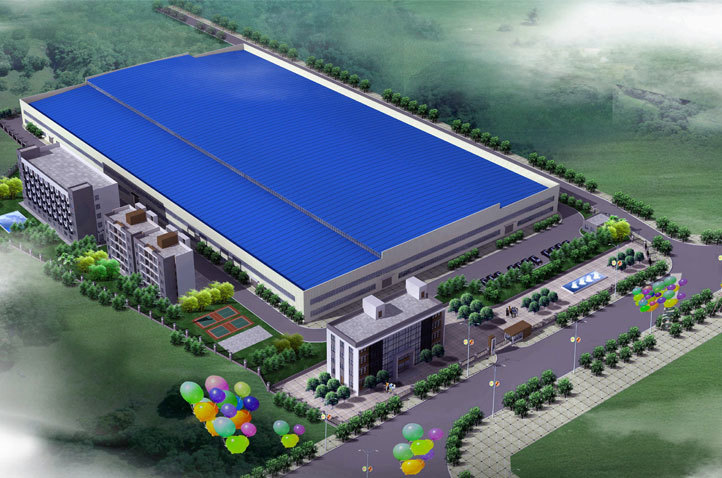
Founded in 2010, Greensina Glass has grown steadily from a small processing workshop into a reliable supplier in the architectural glass industry. The company now employs more than 90 experienced staff members, including skilled technicians, engineers, and quality control specialists. Our production facility covers an area of approximately 7,000 square meters and is equipped with advanced glass processing equipment to ensure precise manufacturing and consistent product quality.
Over the years, Hangzhou Greensina Glass Co., Ltd. has expanded its market to serve customers both domestically and internationally. Our products are exported to Europe, North America, Southeast Asia, and the Middle East. By focusing on innovation, strict quality management, and customer-oriented service, the company is committed to delivering dependable glass solutions and establishing long-term partnerships with clients worldwide.
For industrial buyers, purchasing agents, and product designers, sourcing chemically strengthened glass involves balancing strict mechanical parameters with cost-efficiency. In sectors like consumer electronics, medical touch screens, aerospace, and outdoor smart grids, performance failures can lead to significant liability and warranty costs. Ensuring that your supplier meets exact engineering requirements is critical.
B2B procurement agents prioritize structural consistency across production runs. Specifically, they evaluate: 1. Substrate Composition: Determining whether to use standard Soda-Lime glass or high-performance Aluminosilicate glass. 2. Salt Bath Purity: Monitoring contamination in the KNO₃ bath to prevent drops in Compressive Stress. 3. Edge Treatment Precision: High-precision CNC cutting, grinding, and polishing are required prior to chemical treatment, as post-strengthening adjustments can weaken or break the glass.
| Material Category | Typical Compressive Stress (CS) | Depth of Layer (DoL) | Ideal Industrial Applications | Key Performance Metrics |
|---|---|---|---|---|
| Aluminosilicate Glass | 750 - 950 MPa | 40 - 60 µm | Ruggedized Military Displays, Premium Smartphones, Avionics Interface Screen Covers | Excellent drop protection, superior impact energy absorption. |
| Soda-Lime Glass | 350 - 500 MPa | 10 - 20 µm | Smart Home Switch Panels, Commercial ATM Displays, Digital Signage, Automotive HUDs | Cost-effective for high-volume orders, good scratch resistance. |
Producing reliable chemically strengthened glass requires controlled thermal and chemical environments. The manufacturing process consists of five key steps:
The raw glass sheet is cut to its exact dimensions and ground to the specified profile (flat edge, C-edge, pencil edge, or custom step profile). Once chemically strengthened, cutting or drilling is no longer possible, making initial precision critical.
Microscopic particles and residues must be removed through ultrasonic washing. The glass is then preheated to match the temperature of the salt bath, preventing thermal shock when submerged.
The glass panels are submerged in the molten KNO₃ bath at temperatures between 380°C and 450°C. Immersions range from 4 to 16 hours, depending on the required Depth of Layer (DoL).
Using non-destructive photoelastic stress measurement devices (such as the FSM-6000LE), quality control technicians verify the surface Compressive Stress (CS) and Depth of Layer (DoL) to ensure consistency across production runs.
Modern B2B projects often require specialized post-processing and value-added configurations. As an experienced exporter, Hangzhou Greensina Glass Co., Ltd. provides comprehensive fabrication options to customize chemically strengthened glass for a variety of industries.
Our key customization options include:
Expert answers to common engineering, procurement, and manufacturing questions.
No. Cutting, drilling, or polishing must be completed prior to the chemical strengthening process. Altering the glass afterward disrupts the compressive stress layer, causing the glass to shatter or lose its mechanical strength.
Compressive Stress (CS) measures the intensity of pushing forces within the surface layers of the glass, representing its resistance to initial impact. Depth of Layer (DoL) measures how deep these compressive forces extend into the glass substrate, determining how well the glass resists deeper scratches and cracks.
No. Because chemical strengthening occurs below the glass softening point and relies on atomic ion-exchange rather than rapid air cooling, the glass remains flat without the optical distortion or roller-wave marks common in thermally tempered glass.
Our products are certified to major international standards, including ISO9001, ISO14001, OHSAS18001, CE, SGCC, and ANSI Z97.1, ensuring compliance for structural and architectural installations globally.
High-specification glass solutions optimized for structural, smart home, and commercial architectural projects worldwide.
 Greensina Glass